
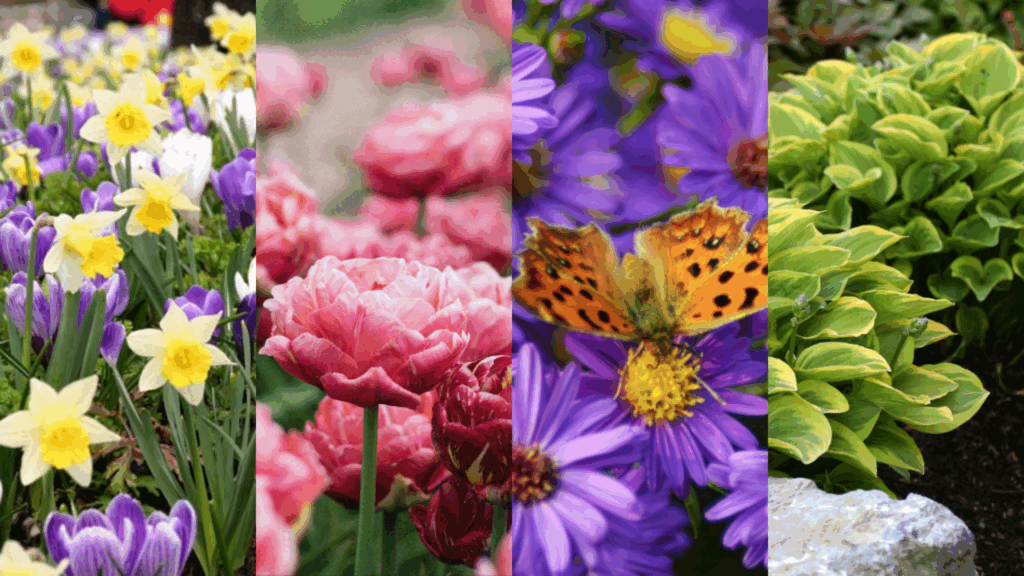
If you’ve ever admired a beautifully landscaped yard in May only to see it looking plain and green by the middle of summer, you’re not alone. It’s one of the most common landscaping mistakes homeowners across Long Island, NY make, and fortunately, it’s one of the easiest to avoid.
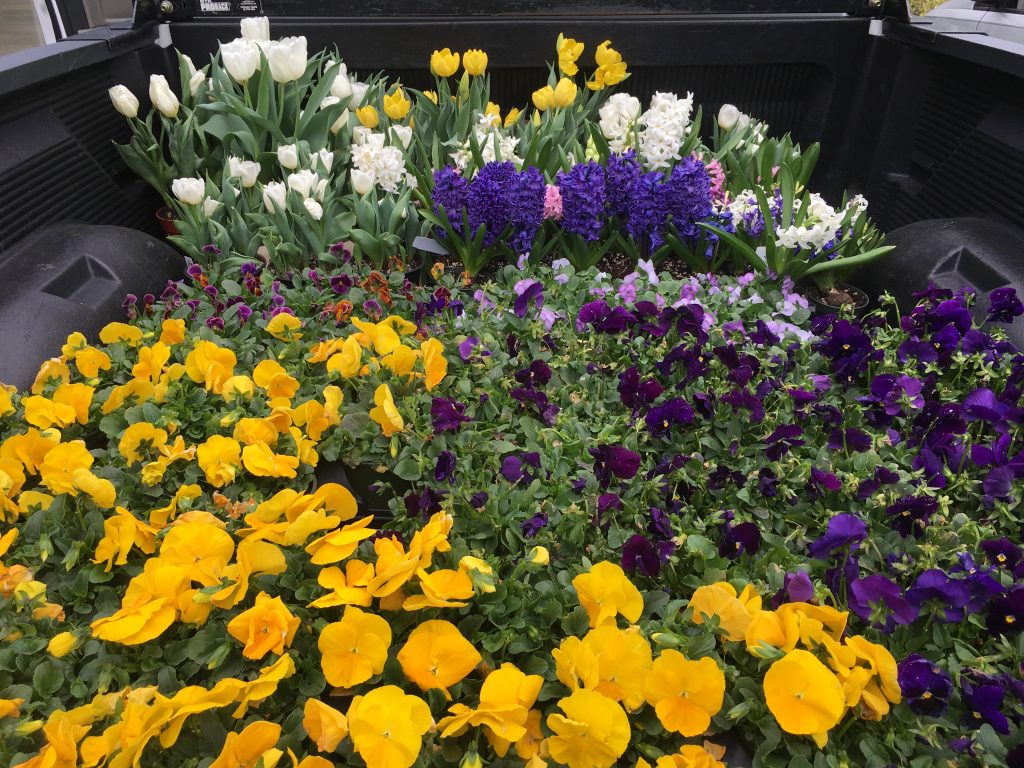
Many gardens burst into color for a few short weeks in late spring, then quickly lose their visual appeal as those flowers fade. The result? A landscape filled with healthy green foliage, but very little color or seasonal interest.
The secret isn’t planting more flowers. It’s planting smarter.
Professional landscape designers use what’s known as a staggered bloom calendar- carefully selecting plants that flower at different times throughout the growing season. Instead of everything blooming at once, your garden transitions naturally from one wave of color to the next, creating an outdoor space that looks vibrant from the first signs of spring until late autumn.
Whether you’re refreshing an existing landscape or starting from scratch, Quality Island Landscaping can design a planting plan tailored to Long Island’s climate and your property’s unique conditions. Contact us for a free planting project estimate, and be sure to follow us on social media for seasonal landscaping inspiration, gardening tips, and before-and-after transformations.
Why Staggered Bloom Calendars Work on Long Island
Long Island experiences four distinct seasons, making it an ideal place for layered landscape design. Instead of relying on one spectacular bloom period, staggered planting ensures something is always taking center stage.
By combining early bloomers, summer performers, late-season flowers, and attractive foliage, your landscape gains:
- Continuous seasonal color
- Better curb appeal throughout the year
- More interest for pollinators like butterflies and hummingbirds
- Less need for constant replanting
- A professionally designed appearance in every season
The result is a landscape that feels alive and intentional- not one that peaks for a few weeks before fading into the background.
Early Spring: Wake Up the Landscape
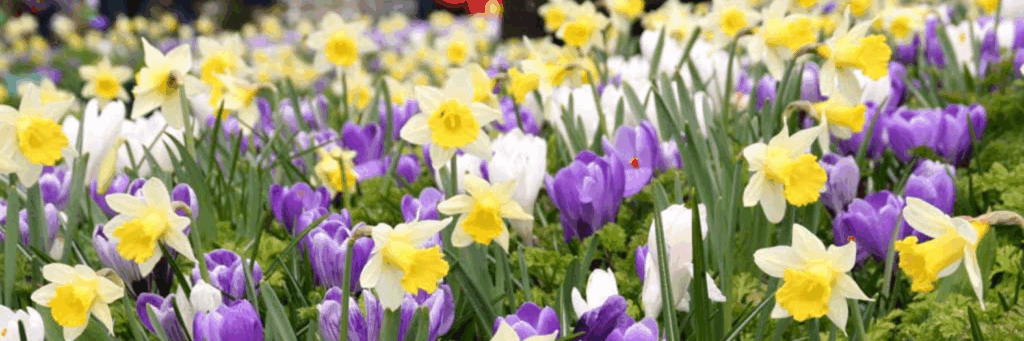
Early spring is all about waking the yard up after a long winter. Because tree canopies haven’t fully leafed out yet, early bloomers get plenty of direct sunlight.
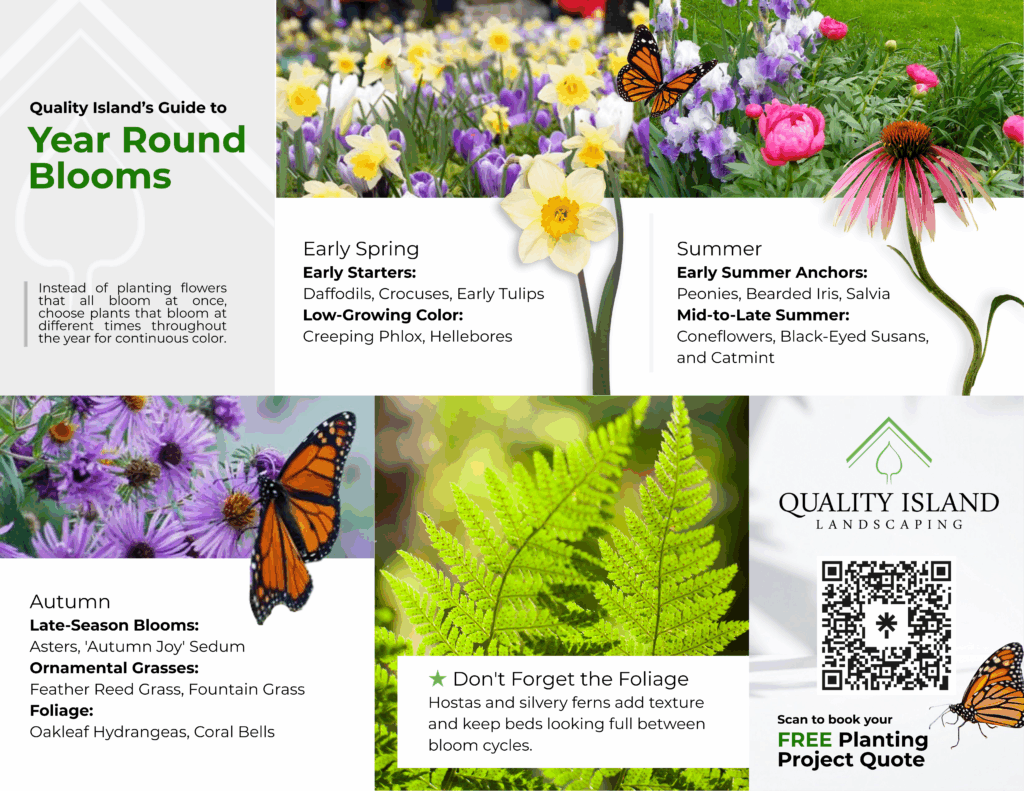
Early Starters
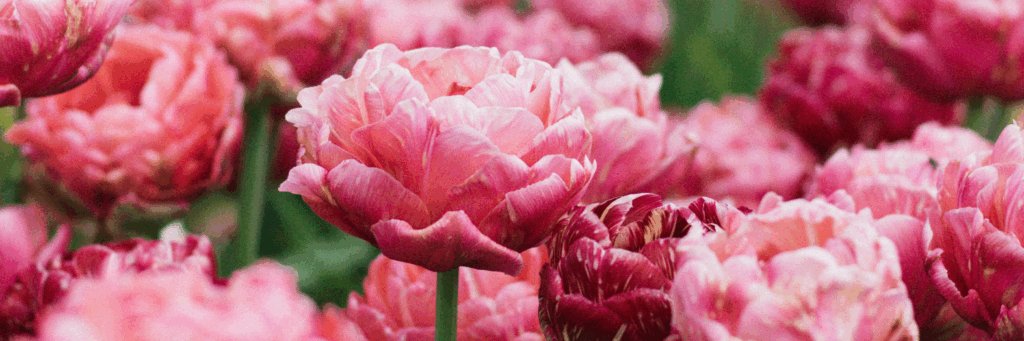
Daffodils, crocuses, and early tulips bring the very first pops of yellow, purple, and white to the landscape while the lawn is just starting to turn green.
Low-Growing Color
Ground covers like creeping phlox and early perennials like hellebores step in next, creating vibrant ribbons of color along the edges of garden beds. Their low-growing habit helps soften borders while filling empty spaces before larger summer plants begin putting on new growth.
Summer: Long-Lasting Color Through the Heat
Summer brings intense heat, so mid-season plants need to be tough. The goal during these months is to feature “long bloomers”—plants that hold their flowers for weeks at a time rather than fading in a few days.
Early Summer
Peonies, bearded iris, and salvia kick off the warmer months with rich, classic color. These timeless favorites create dramatic focal points in landscape beds.
Mid to Late Summer
Reliable, heat-tolerant options like coneflowers (Echinacea), black-eyed Susans, and catmint take over. These hardy choices keep garden beds looking full and colorful right through the hottest weeks of July and August while attracting butterflies and hummingbirds. They’re especially well-suited for Long Island’s warm summers, where dependable performance matters.
Autumn: One of the Most Colorful Seasons
Autumn can actually offer some of the richest tones of the year if you take care to plant the right things!
Late Blooms
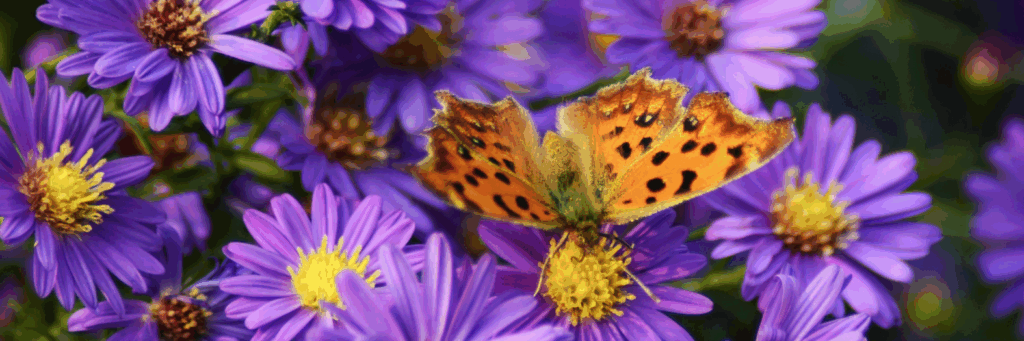
Plants like asters and ‘Autumn Joy’ sedum only come alive as summer fades. Their late burst of flowers helps extend the gardening season well into fall, keeping landscapes colorful long after many other plants have finished blooming.
Ornamental Grasses
Feather reed grass and fountain grass reach their full height in late summer. Their feathery seed plumes last clear through late fall, adding movement, texture, and visual interest even on breezy autumn days.
Colorful Leaves
Foliage plays a huge role in autumn. Oakleaf hydrangeas and coral bells shift into deep burgundy and burnt orange as temperatures drop, giving color even without having petals!
The Gap-Filler: Structural Foliage
Even with a perfectly timed schedule, there will always be brief pauses between bloom cycles. That’s where foliage architecture does the heavy lifting.
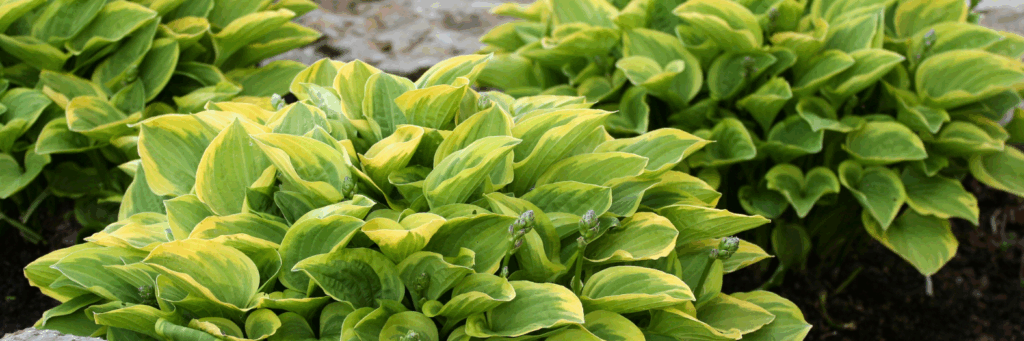
By incorporating plants with distinct leaf shapes, bold textures, or variegated patterns—like broad-leafed hostas or silvery ferns—your garden beds always look finished, intentional, and lush, even on days when nothing is actively flowering.
These structural plants act as the framework of your landscape, ensuring every season has depth, texture, and visual balance.
Invest in a Landscape That Looks Beautiful All Season Long
A great-looking yard doesn’t require spending every weekend working in the dirt. It simply comes down to thoughtful plant selection on day one—ensuring your outdoor space stays beautiful month after month, almost on autopilot.
A professionally planned staggered bloom calendar allows your landscape to evolve naturally throughout the seasons, creating fresh color, texture, and curb appeal from early spring through late fall—all while choosing plants that thrive in Long Island’s unique climate.
If you’re ready to create a landscape that’s beautiful beyond just a few weeks each year, Quality Island Landscaping is here to help. We specialize in designing planting plans that provide lasting seasonal interest, healthier gardens, and stunning curb appeal.
🌿 Request your FREE planting project estimate today, and let us help bring year-round color to your property.
📱 Don’t forget to follow Quality Island Landscaping on social media for seasonal landscaping tips, planting inspiration, Long Island gardening advice, and real project transformations.