
Late-Summer Stars: Why Panicle Hydrangeas Belong in Your Landscape Right Now
As August rolls around, many classic garden blooms begin to tire under the midsummer heat. While perennial beds start fading, Hydrangea paniculata, or the Panicle Hydrangea, is just reaching its peak. If you’ve noticed massive, eye-catching floral cones brightening up local gardens right now, chances are you’re looking at this variety.
If you want an outdoor space that stays vibrant straight through autumn, panicle hydrangeas are the ultimate landscaping solution.
The Beauty and Benefits of Panicle Hydrangeas
Unlike traditional bigleaf hydrangeas (Hydrangea macrophylla) that often struggle with summer sun or drop their blooms early, panicle hydrangeas are tough plants that keep their blooms well into fall.
Unbeatable Late-Season Show: While other shrubs finish by July, paniculata varieties bloom heavily from mid-summer straight into late fall.
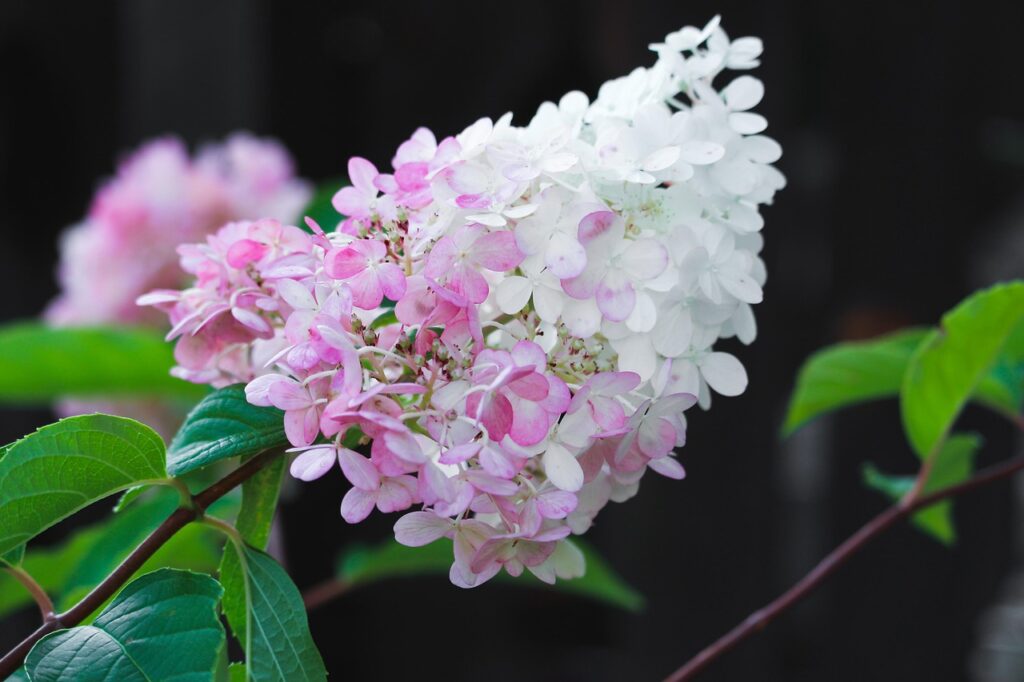
Color-Shifting Flowers: Their dramatic, cone-shaped flower heads display an extraordinary color transformation. Blooms start as lime green or white, slowly shifting to rich pink and crimson tones as night temperatures cool.
Sun & Heat Resilience: Bigleaf hydrangeas are notorious for wilting in the afternoon heat. Panicle hydrangeas, on the other hand, love the sun and feature sturdy, wooden stems that hold heavy blooms upright through summer storms.
Popular Varieties to Consider
Panicle hydrangeas come in a wide range of sizes, making them perfect for grand focal points, privacy hedges, or tight garden borders:
‘Limelight’: This plant features green flowers that turn pink and burgundy in the fall. Grows up to 6–8 feet tall.
‘Bobo’: A dwarf variety maxing out around 3 feet tall, perfect for small yards, low borders, or patio containers.
‘Pinky Winky’: Famous for its two-toned effect, with dense white-and-pink flower cones that reach up to 16 inches long.
‘Little Lime’: This plant has the same colors you’d see out of a Limelight Hydrangea, but grows to half the size at 3-6 feet.
Simple, Low-Maintenance Care
Part of what makes panicle hydrangeas a designer favorite is how remarkably forgiving they are to grow:
Sunlight: They perform best with 4 to 6+ hours of direct sun daily. More sun equals bigger blooms and stronger stems.
Watering: Keep the soil consistently moist after planting to build strong roots. Once established, they are hardy and surprisingly drought-tolerant.
Stress-Free Pruning: Because panicle hydrangeas bloom on new growth produced during the current season, late-winter frosts won’t destroy your upcoming flower buds. A simple structural trim in late winter or early spring is all it takes to encourage vigorous spring growth and massive summer flowers.

Landscape Design Tips & Companion Plants
To create a striking, multi-layered garden bed, pair panicle hydrangeas with plants that share their late-summer peak:
Ornamental Grasses: Feather reed grass or fountain grass adds soft, feathery texture alongside strong hydrangea blooms.
Late-Season Perennials: Plant alongside Black-Eyed Susans, Russian Sage, or Purple Coneflowers to create a rich palette of gold, purple, and pink.
Evergreen Backdrops: Position hydrangeas in front of boxwoods or arborvitae so the white and pink blooms pop against dark green foliage.
Why Right Now Is the Best Time to Plant
Mid-to-late summer is the prime window to get panicle hydrangeas into your landscape. Planting now gives you instant gratification with breathtaking blooms to enjoy today. More importantly, the warm late-summer soil allows root systems to comfortably establish before the winter freeze, setting your plants up for an explosive growth season next spring.
Ready to Upgrade Your Outdoor Space?
Getting soil preparation, sun positioning, and planting depth right is essential for long-term health and maximum flower size. If you want to skip the heavy lifting and enjoy a stunning, professionally installed display right away, our team is here to help.
Don’t let the late-summer bloom window pass you by. Contact us today to schedule your consultation while nursery stock is at its peak!